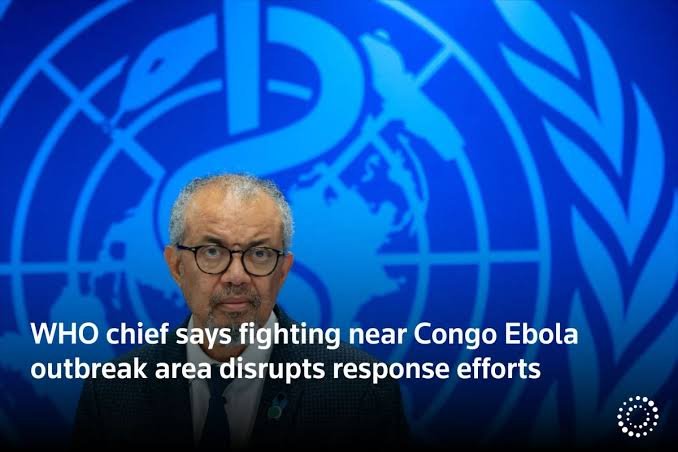
GENEVA, November 24 (Aalimi Nation) – The World Health Organization has warned that heavy fighting around a hospital in Ituri province, in north-eastern Democratic Republic of the Congo, is disrupting the Ebola response and putting patients and health workers at serious risk.
WHO Director-General Tedros Adhanom Ghebreyesus said in a post on social media on Sunday that fighting had been under way since the previous day in the vicinity of the hospital, which lies close to where the outbreak first emerged. Staff involved in life-saving work had been sheltering inside the hospital's maternity ward for more than 24 hours, he said.
"The best medicine is peace," Tedros said, as he called for calm so that civilians could be protected and health workers could continue containing the outbreak.
Ebola response in Congo under strain
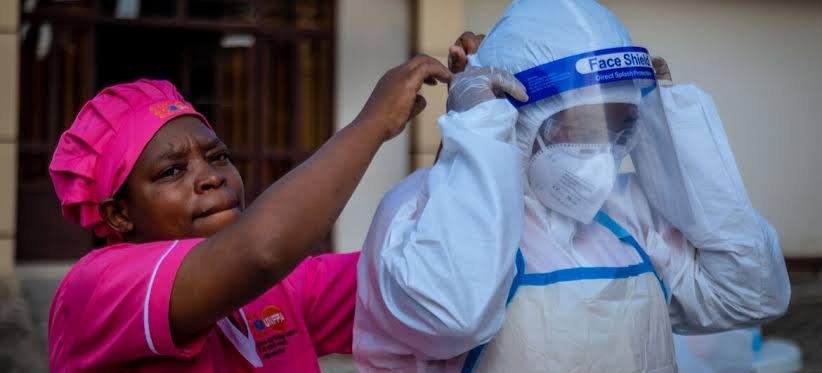
Tedros said the clashes had disrupted the work of the hospital and of the wider response, leaving patients, their families and medical staff "at grave risk". WHO has also pointed to restrictions on the access of humanitarian teams to affected areas as a hurdle to containment, particularly in Ituri.
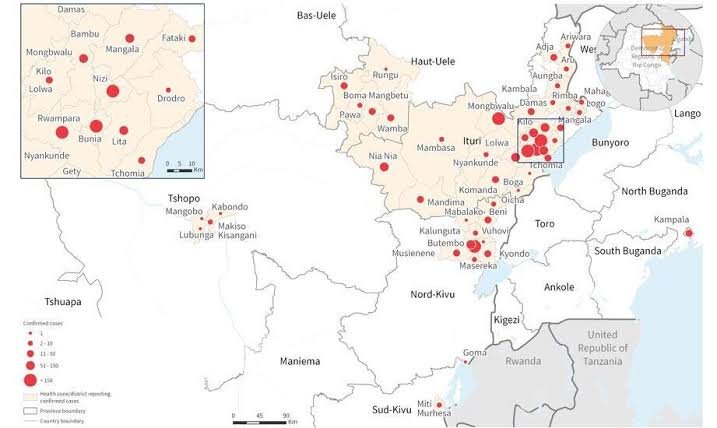
The warning comes at a difficult stage for the response. On November 17, Tedros told reporters that the outbreak, caused by the Bundibugyo virus, had more than doubled in three months. WHO said it had recorded more than 11,000 cases and more than 5,000 deaths across 67 health zones in eight provinces, with between 400 and 500 new cases still being reported every week.
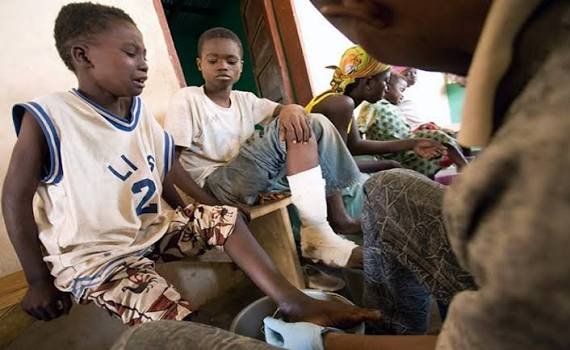
Children have been hit especially hard. Tedros said they account for over a quarter of confirmed cases and a third of deaths, and that seven in ten children under five with confirmed Ebola have died.
Progress and remaining gaps
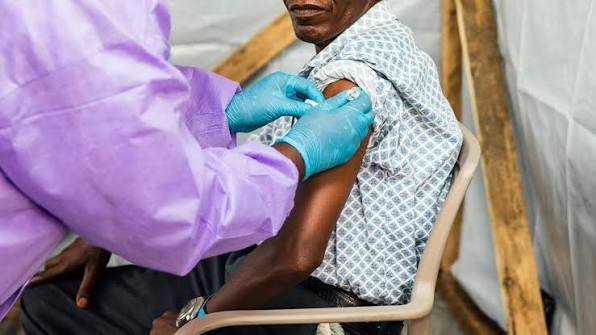
The WHO chief struck a cautious note about recent gains. Rapid transmission has been halted in most of the early epicentres, he said, and the number of laboratories able to test for the virus has risen from two to more than two dozen. Two candidate vaccines for the Bundibugyo virus are due to join an existing trial in the coming weeks.
"Progress in some places is not control of the outbreak as a whole," Tedros said, adding that two-thirds of confirmed deaths are occurring outside Ebola treatment centres.
The outbreak has also crossed borders. Tedros said Kenya has reported nine linked cases, including two deaths, from an imported case, while Nigeria has reported one imported case. "The risk beyond the DRC's borders is not theoretical," he said. He also voiced concern that blanket travel restrictions hinder the response and can discourage countries from reporting outbreaks quickly.
What happens next
Eastern Congo has endured armed violence for more than three decades, and Ituri and North Kivu, the two worst-affected provinces, are also the areas where insecurity is most acute. WHO has not said how long the response at the affected hospital may be suspended. The agency's immediate priority, according to Tedros, is the safety of the staff and patients at the facility, after which teams will need to restore access to communities where transmission continues.