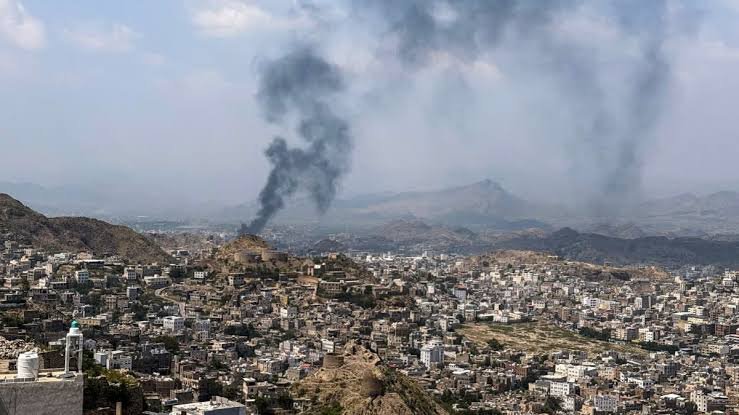
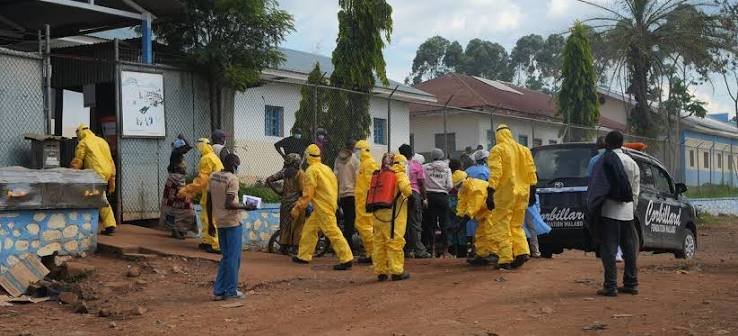
BUNIA, November 27 (Aalimi Nation) – The Congo Ebola outbreak has passed 12,000 confirmed cases, official figures showed on Thursday, as fighting in the country's north-east pushed some response workers out of affected areas and disrupted efforts to contain the virus.
Data from Congo's Ministry of Health showed 12,021 confirmed cases and 5,904 deaths. The outbreak, caused by the Bundibugyo species of Ebola virus, was declared in May in Ituri province and has since been reported in eight of the country's 26 provinces. It is the deadliest of the 17 Ebola outbreaks Congo has recorded.
Congo Ebola outbreak: response under pressure
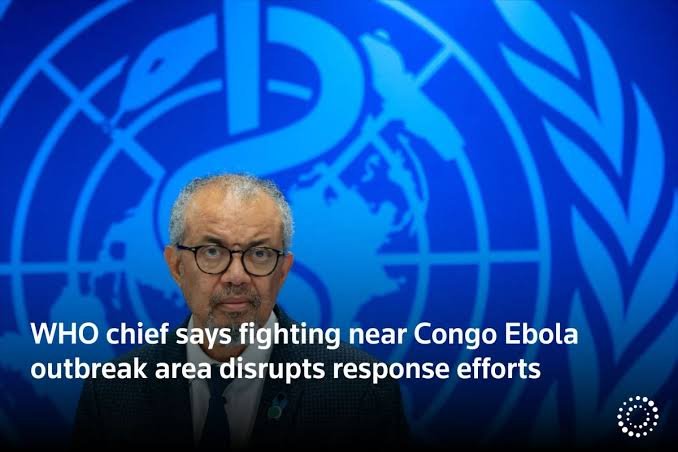
Dr Catherine Smallwood, the World Health Organization's Ebola incident manager, said on Wednesday that recent fighting had stopped teams from reaching some communities, interrupted the monitoring of people exposed to the virus and left some treatment centres short of staff.
On Tuesday, about a dozen people, including two WHO personnel and Congolese health officials, were evacuated to Bunia, the provincial capital, after being trapped for three days in a hospital in Akwe, north-east of the city. "They were caught really in the crossfire, very intense fighting, and we managed to evacuate them," Smallwood said.
A humanitarian worker, Sandrine Buju, said her team came under gunfire on Monday while returning to Bunia from training community volunteers. "We were surprised by gunfire about 15 metres (50ft) from where we were," she said. The team sheltered at a United Nations peacekeeping base before peacekeepers escorted them through two areas of fighting.
Fighting near the response hub
Fighting between the Congolese army and the Convention for the Popular Revolution, known as the CRP, resumed on Thursday morning in Iga-Barrière, a mining town about 25 kilometres north of Bunia, and the clashes are pushing displaced civilians towards Bunia, which serves as a major hub for the Ebola response.
A United Nations mission statement said clashes in Ituri had intensified in recent days. The CRP is one of more than 100 armed groups active in eastern Congo. It was founded last year by Thomas Lubanga, whom the International Criminal Court convicted in 2012 of recruiting children under 15 and using them in fighting. The group declared a unilateral ceasefire in May, but fighting has continued.
Why the outbreak is hard to contain
No approved vaccine or treatment exists for the Bundibugyo species. Containment therefore rests on isolating and treating patients, monitoring anyone who may have been exposed, and burying the dead safely.
Delayed detection, conflict and strained health services have accelerated the spread, and response teams also face poor roads and local violence fuelled by mistrust and misinformation. Nearly half of those confirmed as infected have died.
For comparison, the West African Ebola epidemic of 2014 to 2016 killed about 11,000 people. The toll in Congo has reached roughly half that figure while the outbreak is still growing.
Smallwood said the disruption had already affected the monitoring of exposed people and staffing at some treatment centres. With fighting continuing near Bunia, safe access for response teams remains the main concern for health officials.