
By AALIMI NATION | Health & Science Desk
For decades, cancer treatment has largely followed a common principle: identify the type of cancer, then choose a treatment designed for patients with similar disease.
A new generation of medicine is challenging that model.
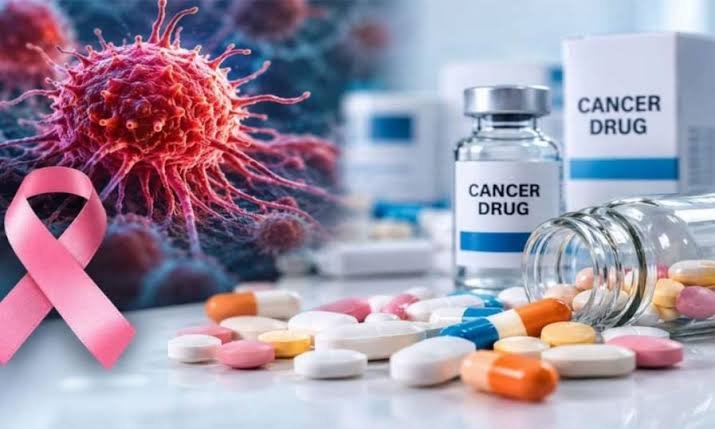
A personalised mRNA cancer therapy being developed by Moderna and Merck has produced a landmark Phase 3 result in patients with melanoma, raising the prospect of a future in which a patient's own tumour could help determine the design of their treatment.
The therapy, intismeran autogene, formerly known as mRNA-4157 or V940, is an investigational personalised neoantigen therapy being tested in combination with Merck's immunotherapy Keytruda (pembrolizumab).
On August 19, the companies announced that their Phase 3 INTerpath-001 trial had met its primary endpoint of recurrence-free survival and a key secondary endpoint of distant metastasis-free survival in patients with completely resected stage IIB-IV melanoma. The companies described the result as the first positive Phase 3 readout for an individualised neoantigen therapy and an mRNA-based cancer therapy.
The detailed numerical results, however, have not yet been released. The companies say they plan to present the full findings at an upcoming international medical meeting and engage regulators on potential filings.
That makes the development significant—but it is not yet a cancer cure or an approved cancer vaccine.
A Vaccine Built Around the Patient's Tumour
Traditional vaccines train the immune system to recognise infectious threats such as viruses or bacteria.
A personalised cancer vaccine works differently.
The treatment is designed around the genetic characteristics of an individual patient's tumour. Researchers analyse mutations found in the cancer and identify potential neoantigens—abnormal markers that can distinguish tumour cells from healthy cells.
An mRNA-based treatment is then designed to present selected tumour-specific targets to the immune system.
The goal is straightforward but ambitious: teach the immune system to recognise and attack cancer cells that may remain after surgery.
In this approach, the patient's cancer is not simply classified by organ or stage. Its molecular fingerprint becomes part of the blueprint for treatment.
Moderna describes these therapies as individualised neoantigen therapies designed around the unique mutations within each patient's cancer.
Why the Phase 3 Result Matters
The latest announcement is important because personalised cancer vaccines have moved beyond early-stage experimentation and into a large, late-stage clinical trial.
The INTerpath-001 study evaluated intismeran in combination with Keytruda as adjuvant treatment—therapy given after surgery to reduce the risk of the cancer returning.
According to the companies, the combination produced statistically significant and clinically meaningful improvements in both recurrence-free survival and distant metastasis-free survival compared with Keytruda alone. The trial will continue to evaluate other outcomes, including overall survival.
The distinction is crucial.
The trial shows that the treatment can improve important disease-control outcomes. It does not yet prove that patients will live longer, and it does not establish that the therapy can permanently eliminate melanoma.
Those questions require longer follow-up and analysis of the complete dataset.
The Earlier Evidence Was Encouraging
The Phase 3 announcement follows encouraging results from an earlier Phase 2b study.
At five years of follow-up, patients with high-risk stage III/IV melanoma who received intismeran plus Keytruda experienced a 49% reduction in the risk of recurrence or death compared with those receiving Keytruda alone.
The combination also reduced the risk of distant metastasis or death by 59%. An exploratory analysis showed a favourable trend in overall survival, although the data were not yet sufficient to establish a definitive survival benefit.
The latest Phase 3 result now provides an important test of whether those earlier findings can be reproduced in a much larger patient population.
From COVID-19 to Cancer
The technology also illustrates how the mRNA revolution has moved beyond infectious diseases.
The same broad technological concept that transformed vaccine development during the COVID-19 pandemic is now being investigated for an entirely different purpose: training the immune system to recognise cancer.
But a personalised cancer vaccine is considerably more complex than a conventional vaccine.
Instead of producing one standard formulation for millions of people, the treatment is designed according to the molecular characteristics of an individual patient's tumour.
That raises both scientific opportunities and manufacturing challenges.
If successful, the approach could help shift cancer medicine further toward precision immunotherapy—treating the biology of a patient's particular tumour rather than relying solely on broad cancer categories.
Why Melanoma Is an Important Testing Ground
Melanoma can be highly aggressive and may spread to distant organs.
Even after a tumour has been surgically removed, microscopic cancer cells can remain undetected. Those cells can later grow and cause the disease to return.
That makes the period following surgery a critical window for treatment.
The strategy being tested by Moderna and Merck is therefore not primarily about treating a large visible tumour. It is about using the immune system to hunt down residual cancer cells before they can establish a new disease burden.
This is one reason personalised neoantigen therapy has attracted significant interest in melanoma research.
Could One Day Every Cancer Patient Have a Personalised Vaccine?
That remains an open question.
Moderna and Merck are studying the technology beyond melanoma, including other cancers such as non-small-cell lung cancer.
But success in melanoma does not automatically translate to every cancer.
Different tumours have different mutation patterns, immune environments and mechanisms for evading the body's defences.
The challenge for researchers will be determining where personalised neoantigen vaccines provide the greatest benefit—and how quickly and reliably an individual treatment can be designed and manufactured.
The Limits of the Breakthrough
The excitement surrounding the Phase 3 result needs to be balanced with scientific caution.
Intismeran remains an investigational therapy. Regulatory authorities have not yet approved it for routine cancer treatment.
The companies have announced positive topline results, but the detailed Phase 3 dataset—including the magnitude of benefit, complete safety findings and longer-term survival outcomes—has yet to be presented publicly. The trial is continuing to assess overall survival.
That means headlines declaring a “cancer vaccine cure” would go far beyond the evidence currently available.
The more accurate conclusion is both more measured and potentially more important:
A personalised mRNA cancer therapy has achieved a positive Phase 3 result, strengthening the case that a patient's own tumour biology can be used to design a more targeted immune response against cancer.
A New Chapter in Precision Oncology
Cancer medicine has steadily moved from broad treatments toward greater precision.
First came treatments designed around the organ where cancer originated. Then came molecular testing, targeted therapies and immune checkpoint inhibitors.
Personalised neoantigen vaccines represent another possible step: designing the treatment around the unique mutations of an individual patient's cancer.
If future data confirm the Phase 3 findings and regulators approve the therapy, the implications could extend well beyond melanoma.
The ultimate vision is not a single universal “cancer vaccine.”
It is something more personalised:
a treatment designed for the cancer inside one particular patient.
That possibility remains experimental today. But the latest Phase 3 result suggests that personalised cancer immunotherapy may be moving closer to becoming a practical reality.
For millions of patients facing cancer, that could represent one of the most consequential developments in precision medicine in years.
— AALIMI NATION | Health & Science Desk
Editorial Note: This article is based on BBC Health reporting and additional publicly available scientific and clinical information. The personalised cancer vaccine remains investigational and should not be described as an approved cure.