
For the first time since the end of the Cold War, Europe is living with the possibility of large scale conventional war on its doorstep. The Russian invasion of Ukraine in 2022 did more than redraw battle lines in Eastern Europe; it shattered a long-held assumption that interstate war on the continent had become a relic of history. In its place has emerged a far more dangerous reality: a new era of military competition, strategic suspicion and crisis instability that is beginning to resemble a modern Cold War.
By Aalimi Nation International Affairs Desk / Rafiq Bhat
The question now looming over policymakers is not whether NATO and Russia want a direct war. Neither side says it does. The real question is whether Europe and by extension the world can avoid stumbling into one before 2030 through miscalculation, escalation, or a regional incident that spins beyond control.
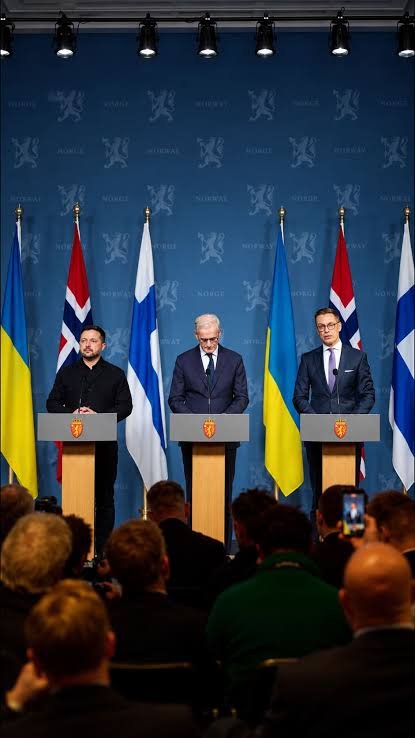
That danger is real because the strategic environment has become more crowded, more militarised and less forgiving. NATO has strengthened its eastern flank, expanded battlegroups, accelerated military exercises and pushed members to boost defence production and ammunition stocks. Finland’s accession in 2023 and Sweden’s entry in 2024 dramatically changed the alliance’s geography, extending NATO’s frontier deep into the Baltic theatre and bringing it closer than ever to Russia’s sense of strategic vulnerability.
NATO Secretary General Mark Rutte has repeatedly argued that the alliance must “prepare to prevent war,” insisting that stronger deterrence, not confrontation, is the only credible way to preserve peace. It is a phrase that captures the paradox of the moment. To prepare for war is, in theory, to prevent it. But in practice, preparation can also be misread as provocation. From Moscow’s perspective, NATO enlargement and sustained Western support for Ukraine can look less like defense than slow motion encirclement. Russia’s response has been equally clear: a wartime reorientation of its military machine, with greater emphasis on missile production, armoured systems, long-range strike capability and strategic coercion.
A security order under strain
Ukraine has become the central battlefield of a larger geopolitical struggle. What began as a regional war has evolved into a stress test for the future of European security. The conflict has forced NATO to confront questions many believed had been settled after 1991: how to deter a continental power, how to reassure vulnerable allies, and how to respond to hybrid threats that combine conventional force with cyberattacks, sabotage and information warfare.
The result is an increasingly militarised Europe. Defence ministries are rebuilding stockpiles, governments are trying to revive industrial capacity, and military exercises are becoming more frequent and more visible. In public, leaders frame these moves as prudence. In private, many admit they are racing against time. The war in Ukraine exposed the cost of complacency, and no European capital wants to repeat that mistake.
Russia, meanwhile, sees the situation differently. The Kremlin continues to portray NATO’s expansion as a strategic threat, while insisting it has no intention of attacking the alliance directly. But Russian officials also argue that Western policy has increased confrontation and left Moscow with little choice but to harden its posture. It is the logic of long conflict: each side says it is reacting defensively, while both prepare for a worse future.
How warfare has changed
Ukraine has also rewritten the rules of war. It is now the clearest example of twenty-first-century conflict, where artificial intelligence, drones, satellite intelligence, cyber operations and electronic warfare are integrated into everyday combat. The battlefield is no longer limited to trenches, tanks and artillery. It extends into command networks, navigation systems, media ecosystems and digital infrastructure that once seemed far removed from the front line.
Military thinkers increasingly warn that future wars may target the systems that keep modern societies functioning: satellites, power grids, ports, data centres, banks and logistics networks. In that environment, the question is no longer just who has more tanks. It is who can operate when GPS is degraded, communications are jammed and digital systems are under attack.
That is why the stakes are so high. A cyberattack that disables critical infrastructure in a NATO member state could trigger Article 5 pressure if the attack is traced to Russia, even if the evidence is incomplete. A strike on a satellite network or a military communications system could compress decision making windows and force leaders to choose between restraint and retaliation under intense uncertainty. In such a climate, speed becomes dangerous. The faster the crisis, the less room there is for verification, nuance or diplomacy.
The likely flashpoints
Analysts often point to several regions where a direct confrontation could begin. The Baltic states are the most obvious. Estonia, Latvia and Lithuania sit on NATO’s frontier and are protected by collective defense commitments. Any perceived aggression there would immediately raise the political temperature across the alliance. Even a limited incident a border clash, sabotage operation, or airspace violation could force leaders into urgent decisions with global consequences.
The Black Sea is another zone of concern. NATO members and partners have increased naval activity there, while the proximity of the war in Ukraine makes military encounters more likely. The region is dense with overlapping interests, disputed waterways and nervous states, all of which increase the chance that a local event could be interpreted as a strategic signal.
The Arctic is becoming more important as well. Melting ice has opened new routes and intensified competition over resources, shipping and military access. At the same time, cyberspace and outer space have become theatres of indirect confrontation. These domains are difficult to deter conventionally, difficult to attribute quickly and even harder to manage when every side assumes the other is testing red lines.
Russian deployments of advanced missile systems, including long range and hypersonic weapons, complicate deterrence further. These moves are not just military calculations. They are political signals designed to shorten the opponent’s decision time and sharpen the sense of vulnerability inside Europe.
Nuclear danger and economic shock
No discussion of NATO and Russia is complete without the nuclear shadow. Moscow and Washington still account for the overwhelming share of the world’s nuclear arsenal. That reality does not make war impossible. It makes war more dangerous, because every escalation carries the possibility of moving from conventional conflict to existential risk.
This is why crisis management matters so much. The Cold War did not stay cold by accident. It survived because both sides maintained channels of communication, understood the cost of direct war and developed enough discipline to prevent every crisis from becoming the last one. Today, those lessons are more relevant than ever, but the margins are thinner. Technology has speeded up the battlefield, and political trust has eroded.
The economic consequences of a NATO-Russia war would be global, not regional. Energy markets would be shocked, shipping routes disrupted, food prices pushed higher and trade flows strained. Gas, oil and fertilizer markets would be the first to react, followed by inflationary pressure in both advanced and developing economies. Supply chains already weakened by recent crises would face additional stress, while investors would flee risk and governments would be forced into emergency mode.
For countries outside Europe, including India, the impact would arrive through higher crude prices, more expensive fertilizers, shipping disruption and trade finance stress. India’s balancing act longstanding defense ties with Russia alongside increasingly deep partnerships with Western democracies would become far more difficult to manage. Strategic autonomy would be tested not in theory, but under the pressure of a global crisis.
Can diplomacy still buy time?
Despite the bleakness of the current environment, there are still powerful restraints. NATO is backed by U.S. military strength and nuclear deterrence, and Russia knows that a deliberate war against the alliance would be catastrophic. That is why many European security assessments still conclude that a full scale NATO-Russia war remains unlikely as a conscious choice by either side.
But unlikely is not impossible. The greater risk is not a planned invasion; it is a chain reaction. A cyber incident, a drone strike, a maritime collision, a border mistake or a misread military exercise could all become the first domino. If leaders assume the worst before the facts are clear, escalation can become self fulfilling.
That is why diplomacy must remain active, not ceremonial. Hotlines, confidence building measures, incident-attribution mechanisms for cyber and space events, and arms-control discussions all matter. So does the language leaders use in public. Tough rhetoric may reassure domestic audiences, but it can also narrow the options available in a crisis.
A senior European security scholar summed it up in one sentence: the greatest danger is not declared war, but miscalculation. That warning should frame every debate about the next five years.
What to watch before 2030
The risk of a NATO-Russia clash before 2030 will depend on a handful of measurable indicators. These include the pace of Russian rearmament, NATO’s own defence production and procurement rates, direct military incidents in the Baltic and Black Sea regions, major cyber or anti-satellite attacks, and the health of diplomatic channels between Moscow, Washington and European capitals.
Journalists and policymakers should also watch whether either side begins using fixed deadlines, rigid red lines or public thresholds. Those tend to make crises more dangerous, not less. A better sign would be quiet diplomacy, practical deconfliction and a sustained effort to separate deterrence from provocation.
The central lesson is sobering. Europe is not inevitably heading toward war, but the odds of a serious crisis are higher than they have been in decades. If restraint fails, the next decade could become the most dangerous since the end of the Second World War. If restraint holds, history may remember this period not as the beginning of a new conflict, but as the moment when leaders chose caution over catastrophe.