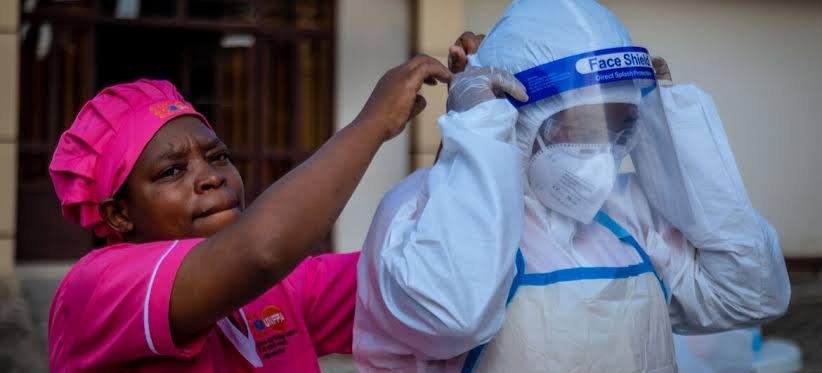
ABUJA, October 21 (Aalimi Nation) – Nigeria has confirmed its first case of Ebola in the current outbreak affecting several African countries, after a woman who travelled from Uganda tested positive in the capital, Abuja. Health Minister Muhammad Ali Pate announced the case on Tuesday and said authorities had begun tracing 44 close contacts. It is the country's first confirmed case since 2014.
What Nigerian officials have said
According to the health ministry, the patient, a woman, arrived in Abuja on an international flight from Uganda. Reports say her symptoms began on October 7 and that she was admitted to a private hospital on October 11, where she received care for several days before the diagnosis was confirmed. She is now in isolation and receiving treatment.
Pate said: "We are doing everything possible to contain this case by tracing all the contacts the individual may have had." The contacts identified so far include health workers, other patients, caregivers and people who travelled with her. Nigerian authorities have not publicly disclosed her nationality.
Uganda disputes where the infection occurred
Uganda's health ministry said it has no confirmed active Ebola cases and that travel through its territory does not establish that the infection was acquired there. One account said the woman had made a business trip to eastern Democratic Republic of the Congo before passing through Uganda. That detail has not been confirmed by Nigerian officials, and the place of exposure remains unresolved.
The wider outbreak
The Democratic Republic of the Congo declared a major outbreak in May. Health authorities there report more than 9,000 confirmed cases and 4,381 deaths, making it the deadliest Ebola epidemic in the country's history. Jean Kaseya, who heads Africa CDC, the African Union's public health agency, said mortality in the DRC is approaching 50 per cent. The outbreak is caused by the Bundibugyo strain, for which there is no licensed vaccine or specific treatment.
Kenya has also been affected. Its first case, a businessman in his forties who had lived in the DRC, died in a Nairobi hospital on October 5. On October 20 Kenya confirmed a ninth case, a 24-year-old man who was a close family member of the first patient and was already in quarantine. Director-General for Health Patrick Amoth said: "All nine cases belong to one cluster, and as of today there is no evidence of transmission outside this group." He said eight patients are stable and that 134 of 135 contacts have been traced and quarantined, with those in quarantine allowed to return home from October 25. Kenya has not imposed restrictions on travel, trade or public gatherings.
The United States has warned its citizens against travel to Kenya over health risks.
Calls for international support
Kaseya called the situation an "extremely serious threat" and urged the international community to provide funding, medical supplies and health workers.
What happens next
The immediate test for Nigeria is whether its contact tracing, which covers people in a city of several million, can prevent further transmission. Health officials are expected to publish updates on the contacts' test results, and neighbouring countries may tighten screening of travellers. A WHO statement on the Nigerian case had not been seen at the time of writing.