RIYADH/MUSCAT, September 17, 2026 — AALIMI NATION: Saudi Arabia has halted crude oil loadings at the Red Sea port of Yanbu after attacks disrupted the Kingdom’s East-West oil pipeline, while a separate maritime incident near the Strait of Hormuz has left two crew members missing from the Panama-flagged tanker ELGAIA.
The two developments have heightened concerns over the security of critical energy infrastructure and commercial shipping routes across the Gulf and Red Sea, adding to pressure on global oil markets amid continuing regional tensions.
Two Crew Members Missing After Tanker Incident
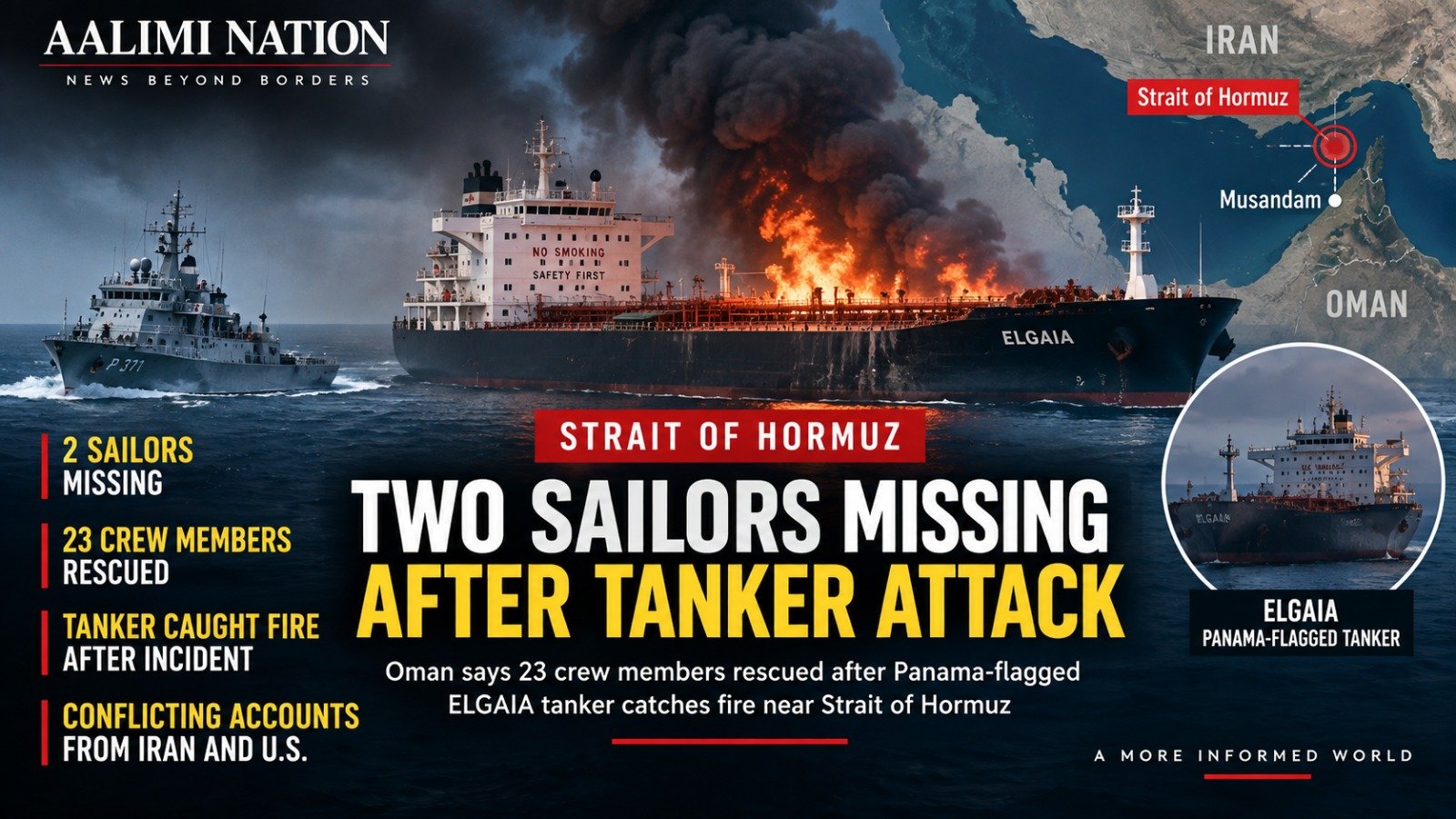
Oman’s Maritime Security Centre said the ELGAIA was being towed toward an Omani port after an engine-room fire following what authorities described as an earlier targeting incident.
The tanker was located approximately 103 nautical miles northeast of Oman’s Musandam Governorate.
A Royal Navy of Oman vessel evacuated 23 crew members and provided medical assistance. However, two crew members remained missing as search operations continued.
Omani authorities have not conclusively identified who was responsible for the incident.
The circumstances surrounding the tanker incident remain disputed, with Iranian and U.S. officials offering differing accounts. Those competing explanations have not been independently resolved.
Saudi Oil Route Disrupted
The tanker incident came as Saudi Arabia confronted a major disruption to its oil-export infrastructure.
The Kingdom’s East-West Pipeline, which transports crude across Saudi Arabia toward the Red Sea, was disrupted following attacks, affecting the flow of oil toward the major export terminal at Yanbu.
Reuters reported that crude loadings at Yanbu had been halted and that some customers had been informed of delays or cancellations involving September cargoes.
The disruption has raised concerns among international refiners dependent on Saudi crude. Poland’s Orlen, for example, has sought additional supplies from alternative producers after receiving notification of delayed Saudi deliveries.
Saudi Arabia Turns to Alternative Export Routes
With the normal Red Sea route disrupted, Saudi Arabia has been exploring alternative arrangements to maintain crude exports to international customers.
Reuters reported that Saudi crude was being offered to Asian buyers through ship-to-ship transfers near Oman’s Sohar port, allowing some shipments to bypass the disrupted Yanbu route.
The alternative arrangement could help reduce the immediate impact of the pipeline disruption, although the extent to which such routes can compensate for lost export capacity remains a key question for oil traders and refiners.
Oil Markets Remain Volatile
The disruptions have added to volatility in international energy markets.
Reuters reported on September 17 that Brent crude was trading around $105.64 a barrel, while U.S. West Texas Intermediate was around $102.10, as additional Saudi supplies routed through Oman eased some immediate concerns over a wider shortage.
Market participants are nevertheless closely watching developments around Saudi infrastructure and regional shipping lanes, particularly the Strait of Hormuz.
Fresh Concerns Around Strait of Hormuz Shipping
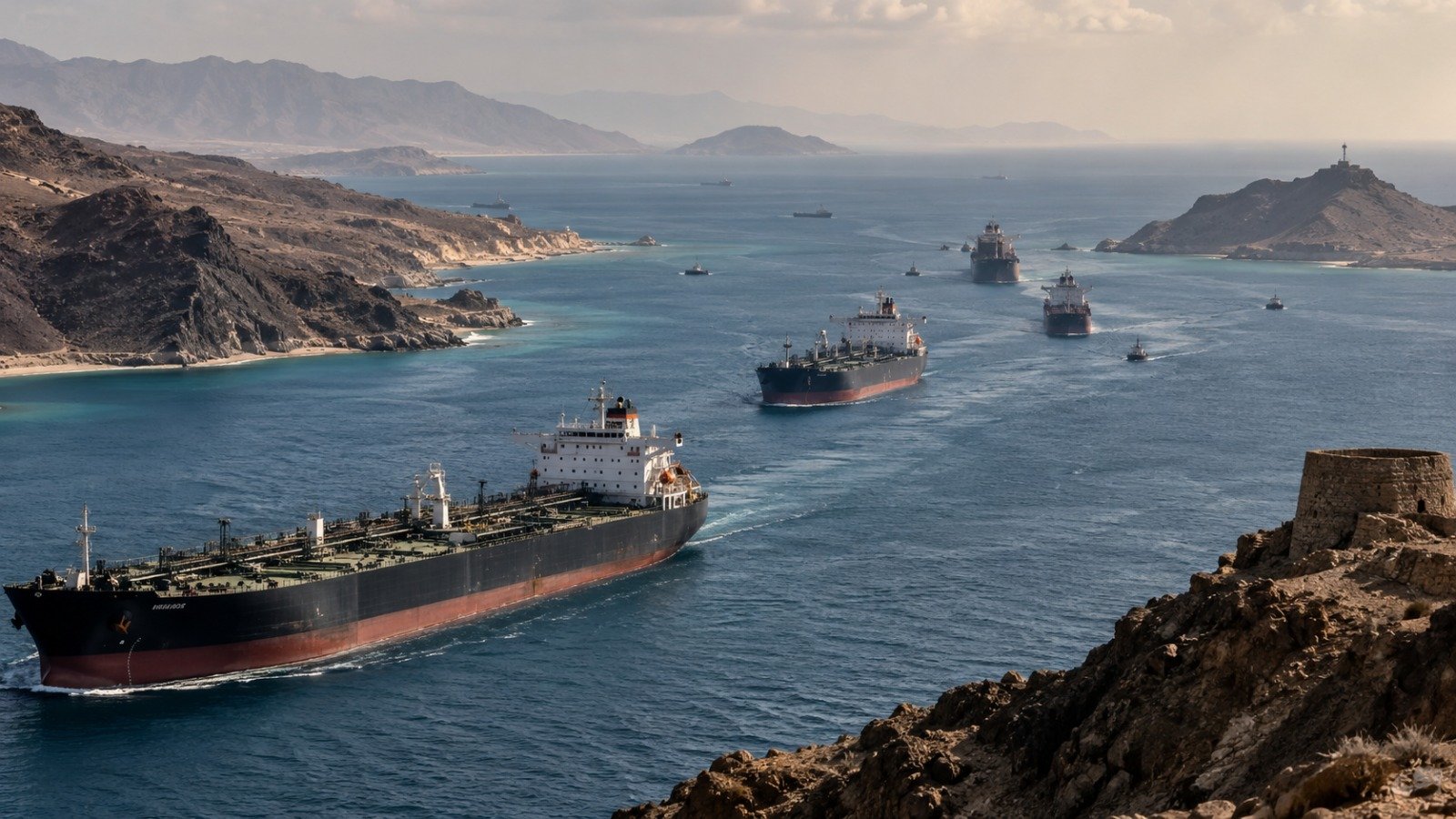
The ELGAIA incident has renewed concerns over the risks facing commercial vessels operating near the Strait of Hormuz, one of the world's most strategically important energy corridors.
The United Kingdom Maritime Trade Operations (UKMTO) separately reported that a vessel had been struck by an unidentified projectile in the Strait.
UKMTO did not identify the vessel. Available reporting does not independently establish whether that advisory referred to the ELGAIA or to a separate maritime incident.
That distinction is important as several incidents involving commercial shipping have been reported in and around the Strait amid heightened regional military tensions.
A Critical Test for Global Energy Security
The disruption affecting Yanbu and the East-West Pipeline, together with the latest maritime incidents around the Strait of Hormuz, highlights the vulnerability of the infrastructure connecting Gulf energy producers with international markets.
Saudi Arabia’s East-West Pipeline is strategically important because it provides an alternative route for transporting crude toward the Red Sea, reducing reliance on maritime exports through the Strait of Hormuz.
However, the latest disruption also demonstrates that alternative infrastructure can itself become exposed to security threats.
For shipping companies, oil traders and refineries, the challenge is increasingly about maintaining several supply routes at the same time rather than relying on a single corridor.
Any prolonged disruption to major pipelines, ports or maritime routes could affect tanker movements, insurance premiums, freight costs and the availability of crude and refined petroleum products in international markets.
The Bigger Question
Saudi Arabia’s use of alternative arrangements through Oman reflects the broader effort by energy producers and international buyers to adapt to a deteriorating regional security environment.
The immediate focus remains on whether alternative Saudi export routes can sufficiently offset the disruption at Yanbu and whether further attacks against energy infrastructure or commercial vessels could generate another wave of supply pressure.
Meanwhile, the search for the two missing ELGAIA crew members was continuing as authorities investigated the circumstances surrounding the tanker incident.
For global energy markets, the central question is whether the region’s alternative pipelines, ports and maritime routes can continue functioning if the current security crisis persists.