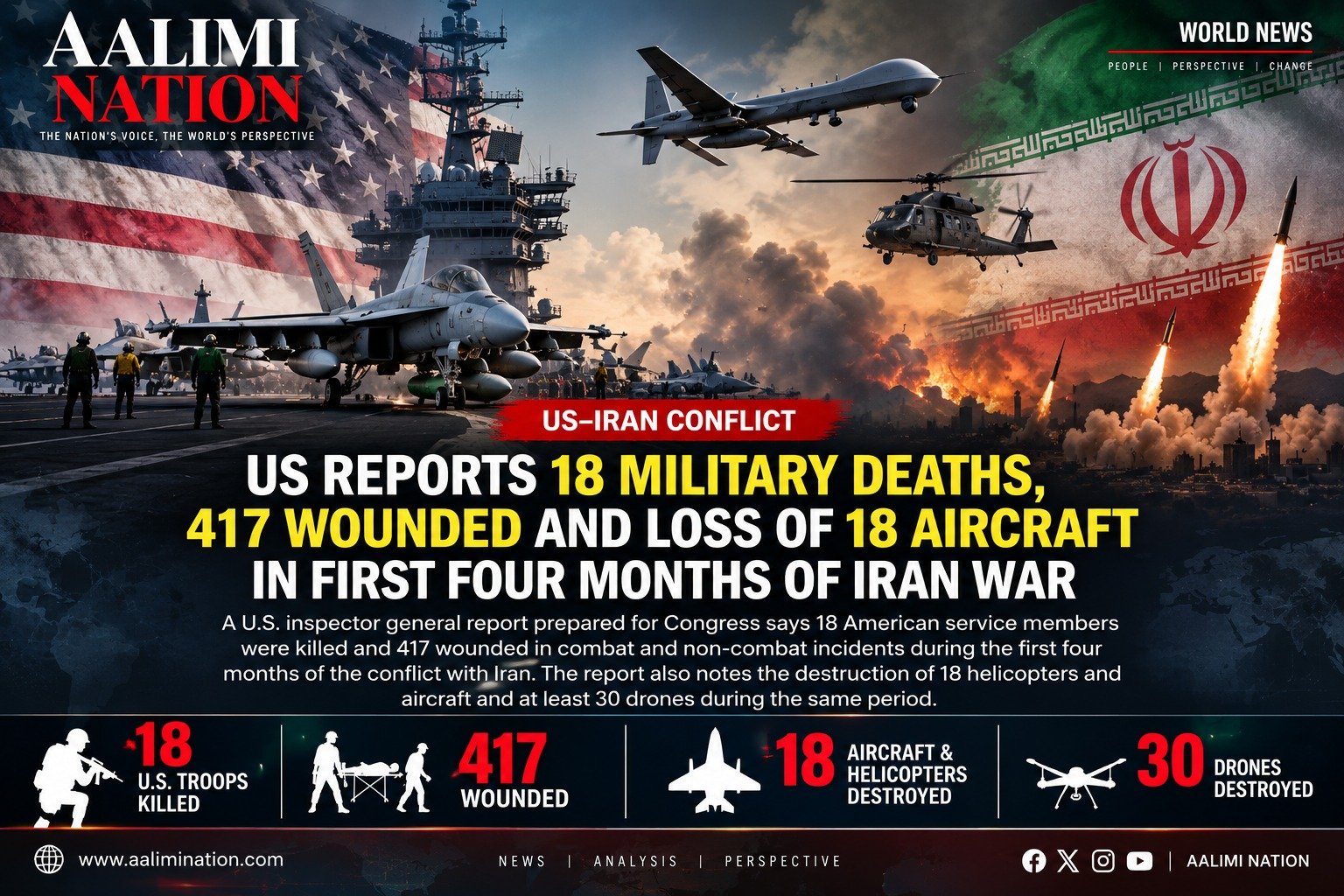
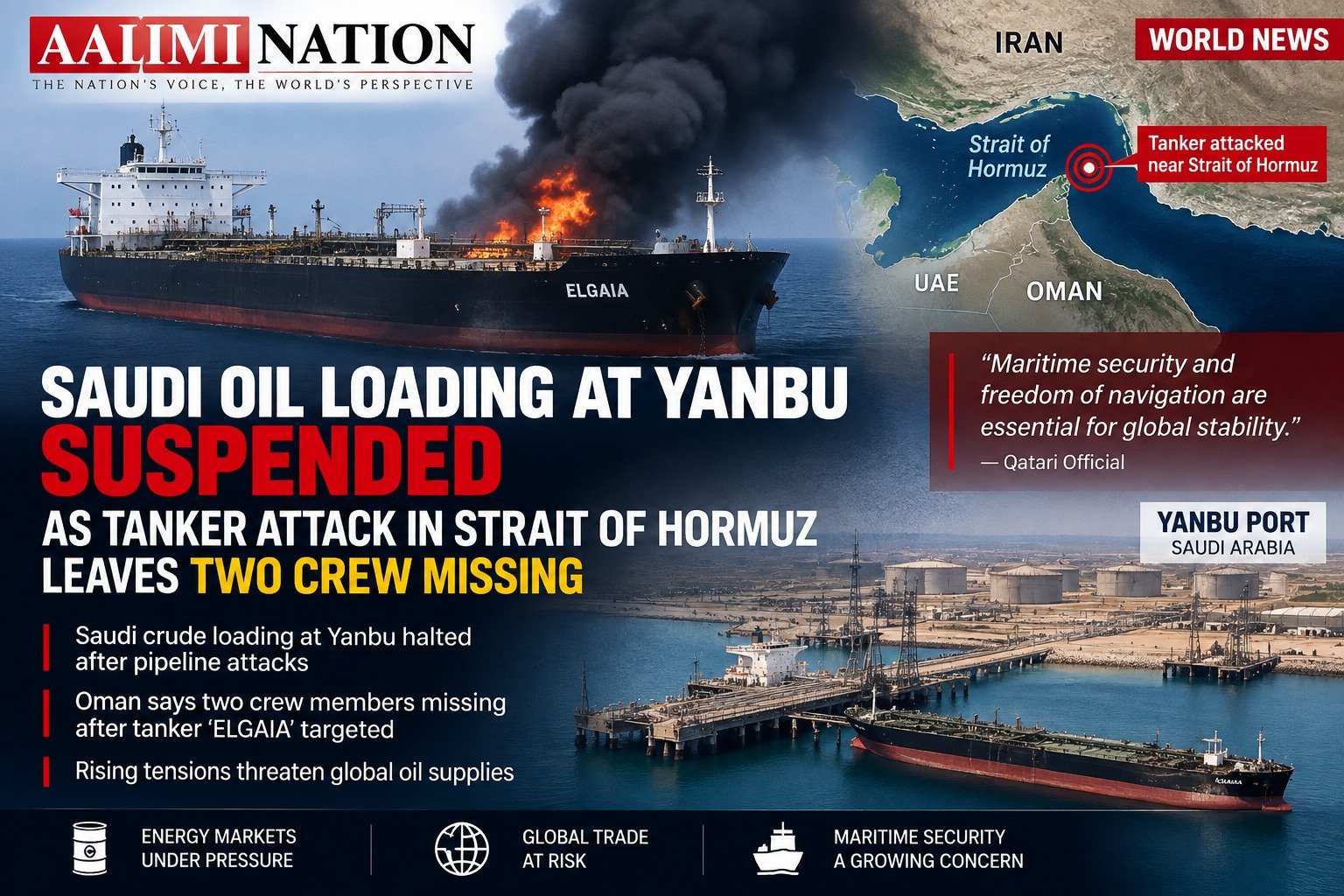
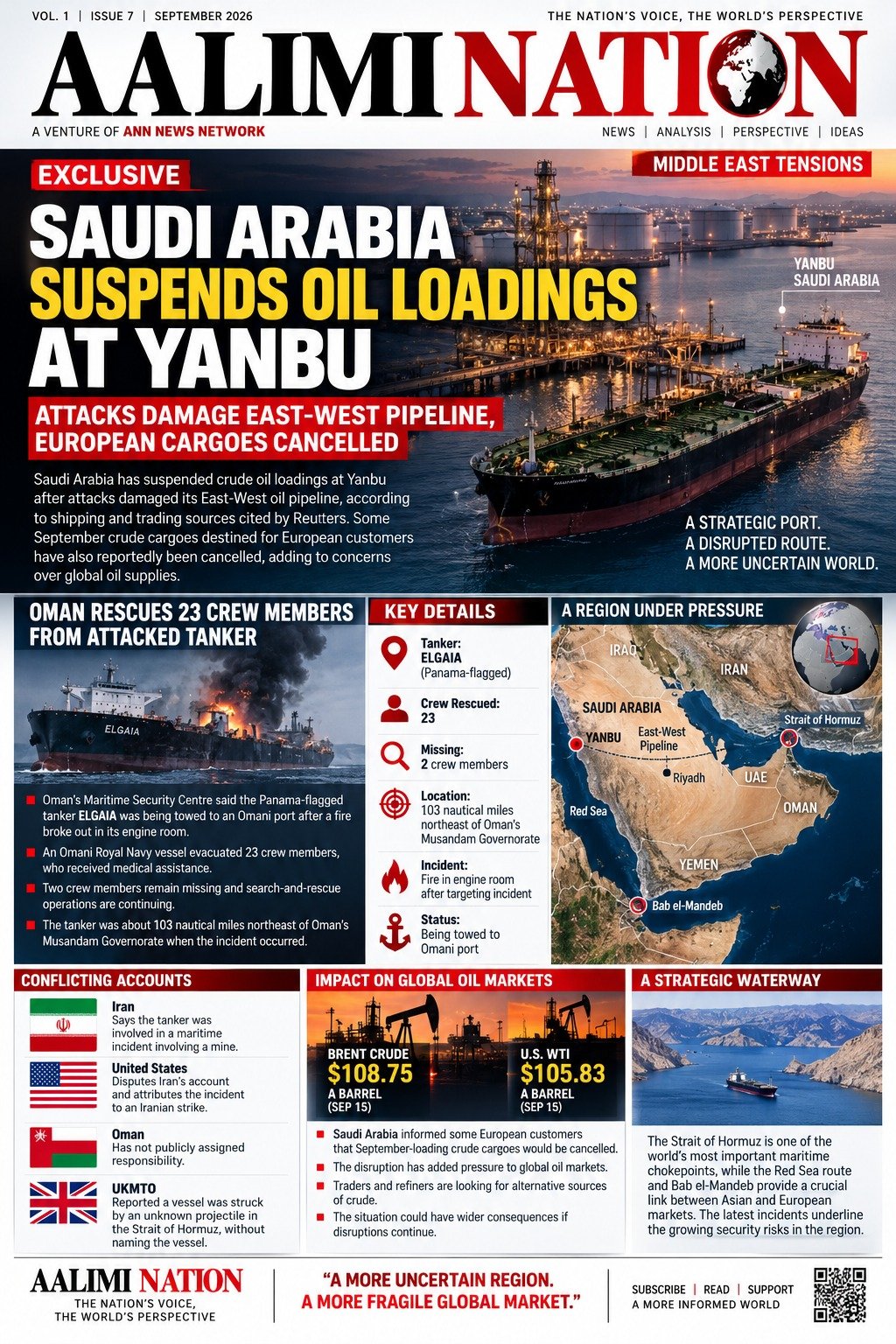
Saudi Arabia has suspended crude oil loadings at the Red Sea port of Yanbu following attacks that damaged its East-West oil pipeline, according to shipping and trading sources cited by Reuters.
By Aalimi Nation Desk
The disruption has reportedly affected some September crude cargoes destined for European customers, with some shipments said to have been cancelled. The developments have added to concerns over global oil supplies as security risks continue to affect major energy and shipping routes across the Middle East.
Tanker ELGAIA Incident Near Oman
In a separate maritime incident, Oman’s Maritime Security Centre said the Panama-flagged tanker ELGAIA was being towed toward an Omani port after a fire broke out in its engine room following what authorities described as a targeting incident.
An Omani Royal Navy vessel evacuated 23 crew members, who were provided with medical assistance. Search-and-rescue operations were continuing for two crew members reported missing.
The tanker was located approximately 103 nautical miles northeast of Oman’s Musandam Governorate when the incident occurred.
The UK Maritime Trade Operations agency separately reported that a vessel had been struck by an unknown projectile in the Strait of Hormuz, although it did not identify the vessel. That has left some details surrounding the incident unclear.
Conflicting Accounts
The precise circumstances remain disputed.
According to Al Jazeera's reporting, Iranian authorities said the tanker incident involved a mine, while the United States disputed that account and attributed the incident to an Iranian strike.
Oman’s Maritime Security Centre has not publicly assigned responsibility for the incident.
The competing accounts mean that the precise cause and responsibility cannot be independently established from the information currently available.
Why Yanbu Matters
The suspension of crude loading at Yanbu is particularly significant because the port is connected to Saudi Arabia’s East-West pipeline, also known as Petroline.
The pipeline provides Saudi Arabia with an alternative route for moving crude toward its Red Sea coast, allowing exports to reach international markets without passing through the Strait of Hormuz.
Any prolonged disruption to this infrastructure could therefore have implications for Saudi export flows and international oil markets.
Reuters reported that Saudi Arabia had informed some European customers that certain September-loading crude cargoes would be cancelled.
Oil Prices Under Pressure
The latest disruptions come as international oil markets remain sensitive to developments around the region.
On September 15, Brent crude settled at $108.75 per barrel, while U.S. West Texas Intermediate reached $105.83 per barrel, according to the information provided for this report.
Continued disruption to production, pipelines, ports or maritime routes could increase pressure on traders and refiners to secure alternative crude supplies.
Hormuz and Bab el-Mandeb in Focus
The incidents are also drawing renewed attention to the strategic importance of the region’s maritime chokepoints.
The Strait of Hormuz is a critical route for international energy shipments, while the Red Sea and Bab el-Mandeb connect major Asian and European trading routes.
Together, these waterways form an important part of the global energy and shipping network.
With security incidents being reported around multiple routes, shipping companies, energy traders and governments are closely watching developments for signs of further disruption.
For global markets, the immediate concern is whether the latest incidents remain isolated events or develop into a broader disruption affecting oil exports, tanker traffic and international supply chains.