Rajasthan's culture is closely tied to its colourful clothing, distinctive cuisine, folk traditions and elaborate fairs and festivals. From the desert communities of western Rajasthan to the historic cities of Jaipur, Jodhpur and Udaipur, traditions vary across regions while retaining a strong connection with the state's history and craftsmanship.
Traditional Dress: Colour Against the Desert
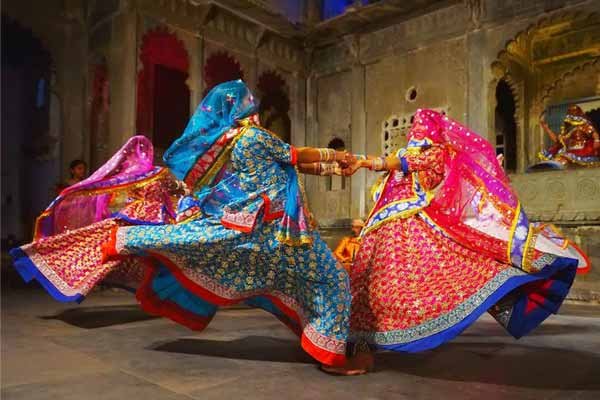
Rajasthani clothing is known for its vibrant colours and distinctive textiles. Leheriya, bandhani and printed fabrics are among the best-known traditional styles. Women commonly wear colourful ghagras or skirts with cholis and odhnis, while men's traditional clothing includes dhotis, kurtas and colourful turbans or safas.
The turban itself can carry regional and social significance, with different styles associated with different areas and occasions. Traditional dress remains particularly visible during weddings, fairs and cultural celebrations.
Rajasthan's textile and craft traditions extend beyond clothing. The state's artisans work with materials including leather, wool, wood, lac, glass, brass, silver, gold and textiles.
Food: Dal Baati Churma and Much More
Rajasthani cuisine developed in an environment where water and fresh green vegetables were historically limited in many areas. This helped shape dishes that use ingredients and preparation methods suited to the region.
The best-known dish is dal baati churma — baked baati served with dal and sweet churma. Other recognised dishes include gatte, ker sangri, lal maas, safed maas and lasun ki chutney. Rajasthan Tourism describes dal-baati-churma, lal and safed maans and lasun-ki-chutney among the state's renowned foods.
Food also becomes an important part of Rajasthan's fairs. At the Pushkar Fair, for example, visitors encounter traditional dishes alongside local handicrafts, textiles and jewellery.
Festivals Bring the Culture Into the Streets
Rajasthan's calendar is filled with fairs and festivals that combine religion, music, dance, crafts and community gatherings.
Teej is particularly associated with women's celebrations, featuring colourful clothing, mehndi, songs, dancing, swings and traditional food such as ghewar.
The Marwar Festival in Jodhpur celebrates the musical and cultural heritage of the Marwar region. Folk performances are accompanied by events including traditional dress and turban competitions.
The Pushkar Fair brings together cultural activities, handicrafts, food and one of India's best-known livestock fairs. Rajasthan's government lists it among the state's major annual fairs.
Other major celebrations include the Desert Festival in Jaisalmer, Gangaur, Mewar Festival, Kajli Teej, Kumbhalgarh Festival, Bundi Festival and Bikaner Camel Festival.
Music, Dance and Storytelling
Rajasthan's cultural identity is also expressed through folk music and dance. Ghoomar, Kalbeliya, Gair and Bhawai are among the traditional performance forms associated with the state.
Folk musicians and storytellers have historically carried stories of romance, devotion, heroism and local history from one generation to another. Rajasthan Tourism describes music, art and dance as deeply woven into the state's cultural life.
A Culture That Supports Livelihoods
Rajasthan's culture is not only about heritage. Crafts, festivals, tourism, food, textiles and traditional performances also contribute to local livelihoods.
The Rajasthan government's 2026-27 Economic Review says tourism supports employment and income across hotels, transport, handicrafts and local services, while also contributing to rural development and preservation of cultural heritage.
From a colourful turban and embroidered textile to a plate of dal baati churma and the music of a desert festival, Rajasthan demonstrates how traditions can remain part of everyday economic and social life while becoming attractions for visitors from around India and the world.
Aalimi Nation | Culture & Heritage Desk