RANG-E-CINEMA
The Valley wants more than a backdrop
Kashmir spent decades as Indian cinema's favourite location. Its first international film festival asked a harder question: can it become a place where films are actually made?
By Rafiq Bhat | Srinagar, September 2026
For generations of Indian audiences, Kashmir was not a place so much as a picture. Songs were filmed on Dal Lake. Romance was staged against the mountains. Gulmarg and Pahalgam entered the visual grammar of Hindi cinema and stayed there.
Then the cameras thinned out. Cinema halls closed, the industry's relationship with the Valley weakened, and Kashmir's place in Indian filmmaking became a memory rather than a working arrangement.
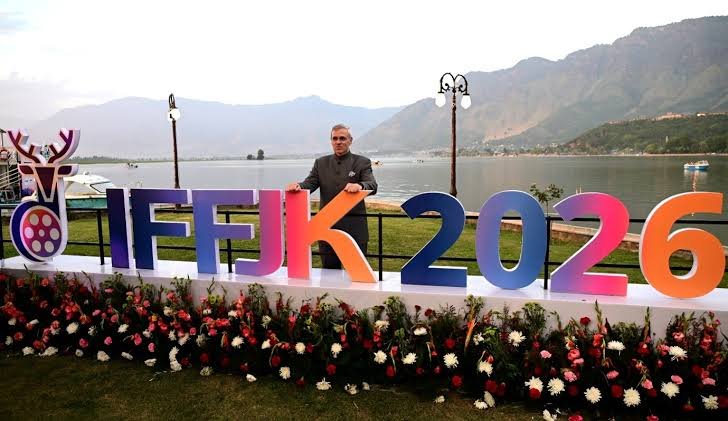
For four days this month, that relationship was reopened. The first International Film Festival of Jammu and Kashmir (IFFJK), held from 7 to 10 September under the theme Rang-e-Cinema, centred on Srinagar with programming extending to Jammu and Gulmarg. It screened 135 films from 41 countries, selected from roughly 1,100 submissions sent in from more than 90 countries. India led with 64 titles, followed by France with 13 and Iran with eight.
The numbers were the easy part. The more interesting argument ran underneath the screenings: whether Jammu and Kashmir can move from hosting film shoots to building a film industry.
Chief Minister Omar Abdullah, who inaugurated the festival, framed it as a beginning rather than an event. "Today, as we launch this festival… we are not just opening a cinema event. We are opening a new chapter in the longstanding romance between Jammu & Kashmir and the silver screen," he said.
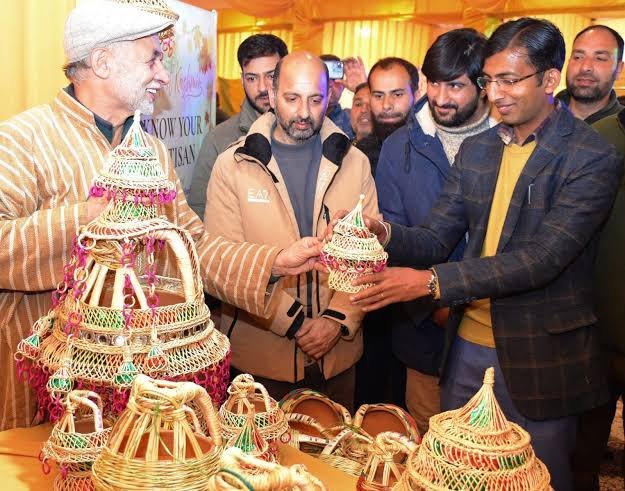
He also asked visiting filmmakers to point their cameras somewhere other than the scenery. "When you bring your camera to Jammu and Kashmir to create, do not just look for mountains. Seek out our stories, talk to our artisans, listen to our musicians, walk through our city lanes, and let our living culture infuse your narratives."
It was a pointed request. Kashmir has been photographed exhaustively. The lives behind those photographs — the artisans, the musicians, the neighbourhoods, the folklore, the young — have been filmed far less.
Shreya Singhal, Director of Information and Public Relations, who led the organising effort, described the festival as an attempt "to revive the legacy of filmmaking and to promote J&K as a premier film destination both in India and across the globe". Alongside screenings, the programme carried masterclasses, workshops, roundtables and policy sessions — the parts aimed at people who want to work in cinema, not only watch it.
"Small, unique Kashmiri films can travel all over the world with the right story." — Sriram Raghavan, filmmaker
By the second day the festival had acquired a Bollywood accent. The directors Sriram Raghavan and Imtiaz Ali appeared alongside the actors Pankaj Tripathi and Divyenndu, meeting audiences, students and the press.
Raghavan, speaking to ANN, argued that the route forward runs through local talent rather than visiting crews. "Local artists should also be brought here and given a chance. The industry here will flourish like Malayalam, Marathi and Gujarati cinema," he said. The comparison carries weight: regional cinema in India has already shown that a story rooted in one culture can travel widely without diluting itself.
Ali, whose films have long used journeys and landscape, spoke of the Valley as unusually suited to storytelling and of the potential of filmmakers based there. Tripathi and Divyenndu, widely known for Mirzapur, made the same point in blunter terms: Kashmir has rooted stories that deserve more than songs and scenic inserts, and theatres and streaming platforms now offer them a route to an audience.
The image most likely to outlast the festival is the floating cinema on Dal Lake, where a screen was set on the water and audiences watched from shikaras with the Zabarwan range behind them. The programme was chosen for its history: Junglee, Arzoo, Kashmir Ki Kali and Kabhi Kabhie, films shot on the same waters decades ago.
Singhal described it as a way of giving screenings an iconic setting while showing visiting delegates the region itself. It doubled as an argument — that Kashmir's landscape can produce new cinematic experiences, not only host old ones.
THE FIRST EDITION 135 films screened · 41 countries represented · 1,100 submissions received · ₹96 lakh total prize purse
The J&K Select category placed five films from the region inside the main competition rather than on its margins. The award, worth ₹10 lakh, went to Kapil Mattoo's Tasrufdaar (Djinns of Kashmir), a Kashmiri-language film made and performed by Kashmiris, about a Kashmiri Muslim man and the spirit of his late father's childhood friend, a Kashmiri Pandit. Mattoo said he was "numb" when the result was read out, and used the platform to argue for sustained mentorship rather than one-off recognition.
The international jury named Whisper My Name, directed by Iran's Rasoul Sadr Ameli, best film, with a prize of ₹25 lakh. Husnora Rozmatova took both best director and best debut for The Song Sustxotin, worth ₹15 lakh each. Amin Hayayee won best actor for Whisper My Name and Taniya Maniktala best actress for Arifa. Baba Tassaduq Hussain won best cinematography for Naqsh-e-Daur, Victor Brasie best sound design for Dead Dog, and Maja Ajmia Yde Zellama best editing for Têtes Brûlées.
Masterclasses ran through the final days, led by Raghavan, the editor Namrata Rao, the sound designer Baylon Fonseca, the actor-director Chittaranjan Tripathy and the cinematographer Anil Mehta. The Spanish producer Anna Saura Ramón, visiting India for the first time, pointed to a possibility beyond Mumbai: co-productions, documentaries and independent work that treat Kashmir as a partner rather than a location.
Those meetings are the part that cannot be counted. A student who met a director, a writer who found a producer, a technician who found a collaborator — few of those conversations become films, but industries are built from the ones that do.
At the closing ceremony at SKICC, Abdullah sharpened his opening message: Jammu and Kashmir should stop being only a sought-after filming location and become a place where stories begin. The distinction is practical. A location can be rented. An ecosystem has to be built, and it requires trained crews, production and post-production facilities, financing, distribution and permissions that work.
The government has said the festival will be annual, which converts a successful first edition into an obligation. More local filmmakers, more training, film schools brought into the programme, and activity that does not stop when the four days end.
For decades the Valley appeared on India's screens as scenery. The test now is whether the next generation inherits only the memory of films made in Kashmir, or the means to make films from it.