
WASHINGTON: The United States has significantly expanded its sanctions campaign against Iran, targeting networks linked to the country's oil trade, weapons programmes, cyber operations and international financial activity as the Trump administration seeks to tighten economic pressure on Tehran.
The US Treasury Department said the latest measures target nearly 60 Iranian-linked individuals, companies and vessels, including networks accused of supporting Iran's ballistic-missile and nuclear programmes, facilitating oil sales and conducting cyber operations.
The campaign, described by Treasury Secretary Scott Bessent as an economic offensive, is designed to restrict the financial channels through which Tehran generates revenue and moves money internationally.
Oil Revenue Under Pressure
A major focus is Iran's oil industry, which remains a crucial source of government revenue.
The latest measures target brokers, financial intermediaries and vessels involved in Iran's oil trade, including five tankers identified by Washington as part of Iran's so-called shadow fleet.
The United States has also warned countries and companies continuing to conduct business with Iran that they could face secondary sanctions, potentially restricting their access to the US financial system. Washington has not immediately imposed such penalties on all trading partners, but has given them time to reconsider their commercial ties with Tehran.
Weapons and Military Networks Targeted
The sanctions also focus on international procurement networks accused of helping Iran obtain technology and equipment for its military programmes.
More than 20 of the latest measures reportedly target actors in the Middle East and Asia involved in Iranian military procurement, including Chinese companies accused of supplying dual-use technology.
Washington has repeatedly targeted networks supporting Iran's Islamic Revolutionary Guard Corps (IRGC) and its missile and unmanned-aircraft programmes.
Earlier US sanctions this year also targeted foreign companies and individuals accused of helping Iran acquire weapons components and sensitive machinery.
Financial Networks and Digital Assets
Washington is also seeking to disrupt Iran's ability to access international financial channels.
The latest campaign expands restrictions into areas including cryptocurrency, technology, gold, aviation and shipping.
The Treasury Department has previously accused Iranian-linked networks of using shadow banking systems, front companies and digital-asset exchanges to move money and evade sanctions.
In August, US authorities targeted cryptocurrency exchanges that Washington said were being used to launder billions of dollars and support the IRGC and other Iranian-linked organisations.
China Faces a Difficult Choice
The campaign could also place pressure on Iran's major trading partners.
China is Iran's largest oil customer, making Beijing's response particularly important. Washington is urging countries to reduce economic ties with Tehran while attempting to avoid an immediate confrontation with Beijing.
The effectiveness of the campaign will therefore depend partly on whether international companies, banks and governments are willing to risk access to the US financial system in order to continue trading with Iran.
A Broader Economic Strategy
The latest measures are part of a wider US campaign that has already targeted Iranian oil revenues, shadow banking networks, weapons procurement and shipping.
The Treasury has described the broader strategy as an effort to cut the financial lifelines supporting Iran's military capabilities and regional activities.
For Tehran, the challenge is to maintain access to foreign currency, oil markets and international trade while facing increasingly sophisticated restrictions.
Impact Beyond Iran
The sanctions could have implications well beyond the Iranian economy.
Any significant reduction in Iranian oil exports could affect global energy markets, while restrictions on shipping and financial transactions could increase costs for companies involved in regional trade.
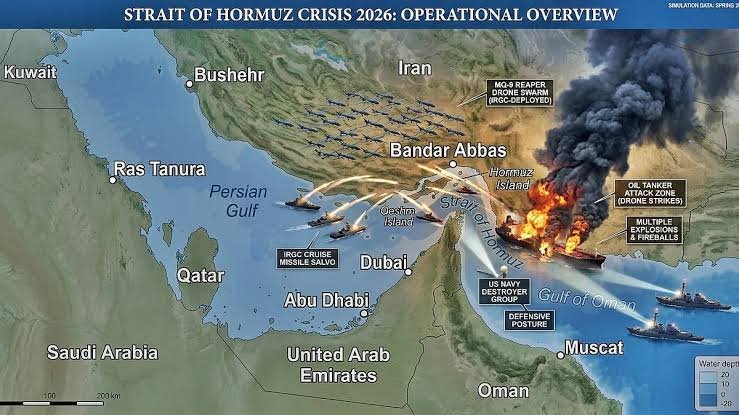
The measures also come as tensions surrounding the Strait of Hormuz remain high, adding another layer of uncertainty to international energy and shipping markets.
The Bigger Question
Washington's latest sanctions represent an escalation of economic pressure rather than a simple extension of existing restrictions.
The key test will be whether the campaign can persuade Iran to change its policies while maintaining enough international cooperation to make the sanctions effective.
For Tehran, the immediate challenge is preserving its oil revenues and financial channels.
For Washington, the challenge is ensuring that economic pressure does not simply push Iranian trade further into alternative financial systems and markets.
The sanctions may tighten the economic squeeze on Iran, but their ultimate impact will depend on how effectively Washington can restrict Tehran's access to international trade without triggering wider disruption.
— AALIMI NATION | International Affairs Desk