A decade ago, parents worried about where their children were after school. Today, many worry about where their children are online.
By AALIMI NATION Magazine
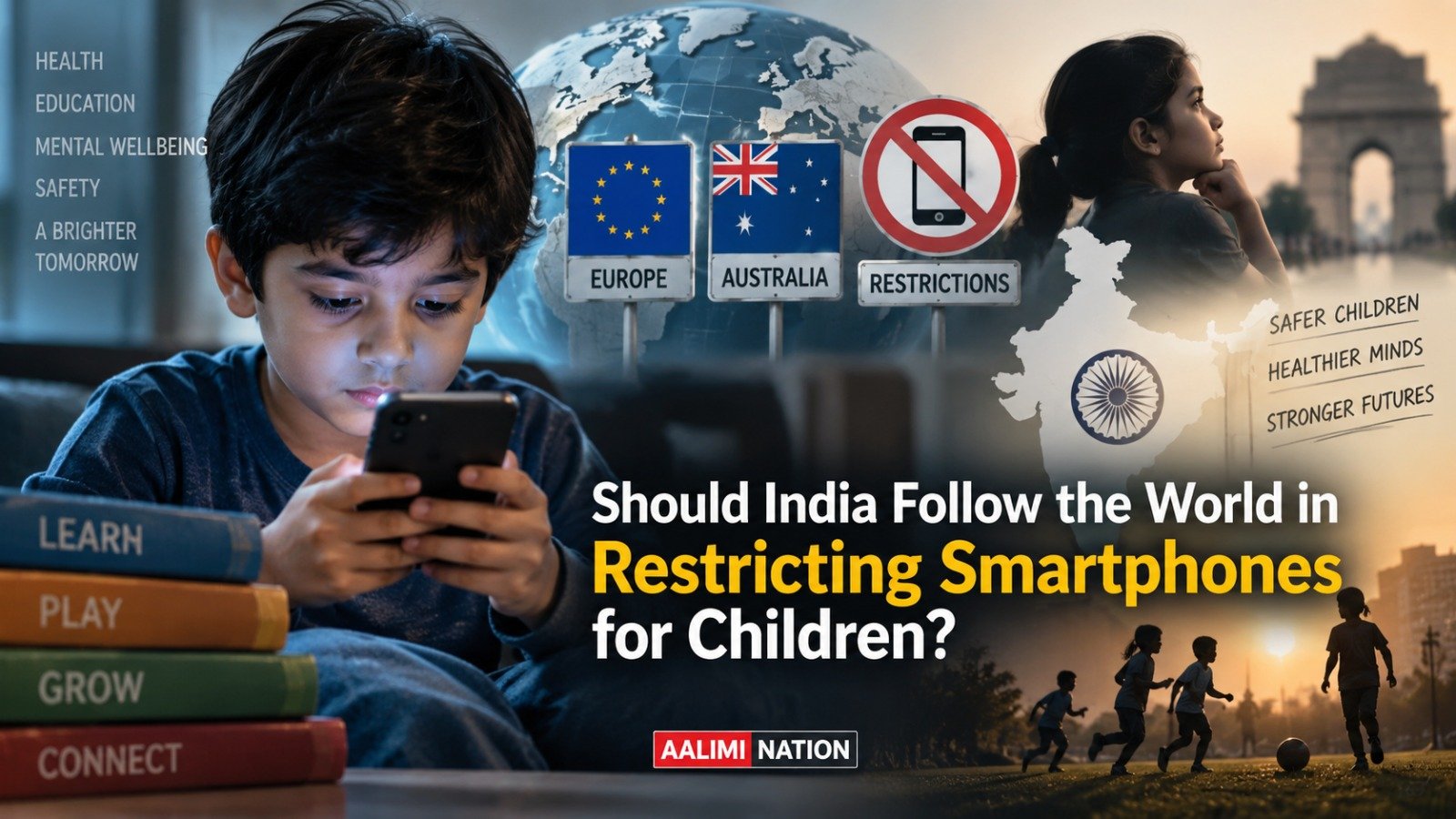
Across dining tables, classrooms and playgrounds, a growing concern is emerging: are smartphones doing more harm than good to children? As screen time continues to rise, governments around the world are beginning to act. From Europe to Australia, policymakers are introducing restrictions aimed at protecting young people from the unintended consequences of constant digital connectivity.
The debate is now reaching India, home to one of the world’s largest populations of internet users and a rapidly growing number of children with access to smartphones.
A Global Shift
Several countries have already moved to limit smartphone use among children, particularly in schools. France was among the first to introduce a nationwide ban on mobile phones in primary and middle schools. The Netherlands, Italy, Sweden and other nations have followed with similar measures aimed at reducing classroom distractions and improving student wellbeing.
Australia has gone even further, becoming one of the strongest voices in the global conversation about children’s online safety. Policymakers there argue that unrestricted access to social media and smartphones is contributing to mental health challenges among young people.
These measures do not represent a rejection of technology. Rather, they reflect growing concern that children may be accessing powerful digital tools before they are emotionally and psychologically prepared to manage them.
The Hidden Cost of Constant Connectivity
For many families, smartphones have become an essential part of everyday life. They offer educational resources, communication tools and access to information unimaginable just a generation ago.
Yet experts increasingly warn that excessive smartphone use can come at a significant cost.
Research from around the world has linked prolonged screen time with increased levels of anxiety, depression and sleep disruption among young people. Social media platforms, designed to maximise engagement, often expose children to unrealistic lifestyles, cyberbullying and constant social comparison.
Teachers report shorter attention spans and increased difficulty maintaining concentration in classrooms. Parents describe children spending hours scrolling through videos, playing online games or interacting with social media instead of reading, exercising or engaging in face-to-face conversation.
The concern is not simply about technology itself, but about the amount of time it occupies in a child’s life.
India’s Growing Challenge
India is experiencing a digital revolution. Affordable smartphones and inexpensive internet access have connected millions of families to the online world. Children are becoming smartphone users at increasingly younger ages.
While this connectivity has opened doors to education and opportunity, it has also created new challenges.
In cities and villages alike, many parents now speak of children becoming dependent on screens. Outdoor play is declining, family interaction is changing and teachers are reporting increased distraction among students.
Mental health professionals have also raised concerns about excessive gaming, social media addiction and exposure to inappropriate online content.
For a country with one of the youngest populations in the world, these concerns carry significant long-term implications.
Ban or Balance?
Few experts advocate a complete ban on smartphones for children. Instead, many support a balanced approach that combines technology with safeguards.
Possible measures include restricting smartphone use during school hours, strengthening parental controls, promoting digital literacy and introducing age-appropriate regulations for social media platforms.
Supporters argue that such policies would allow children to benefit from technology while reducing its potential harms.
Critics, however, caution that excessive restrictions could limit access to educational resources and widen the digital divide. They argue that the focus should be on responsible use rather than outright prohibition.
A Decision for the Future
The debate over smartphones is ultimately a debate about childhood itself.
How much screen time is too much? What role should technology play in a young person’s development? And where should governments, schools and parents draw the line?
As more countries move towards tighter regulations, India is likely to face increasing pressure to consider its own approach.
The challenge is not whether children should have access to technology. It is whether society can ensure that technology serves children’s interests rather than shaping their lives in ways that may prove difficult to reverse.
For India, the answer may determine how an entire generation grows, learns and connects with the world in the decades ahead.
AALIMI NATION | Special Feature
“Technology should be a tool in a child’s hand, not a force that controls their future.”